
Four important initiatives to protect the global environment
Below, we introduce important initiatives aimed at preventing global warming and achieving a sustainable future. Each initiative is a signpost for countries around the world to work together toward a common goal and protect the global environment. For more information, please see each overview page.
Project 1Climate Crisis
Introduces the need for urgent action on global warming and its impacts. Learn about the importance of reducing greenhouse gas emissions and the measures the world should take.
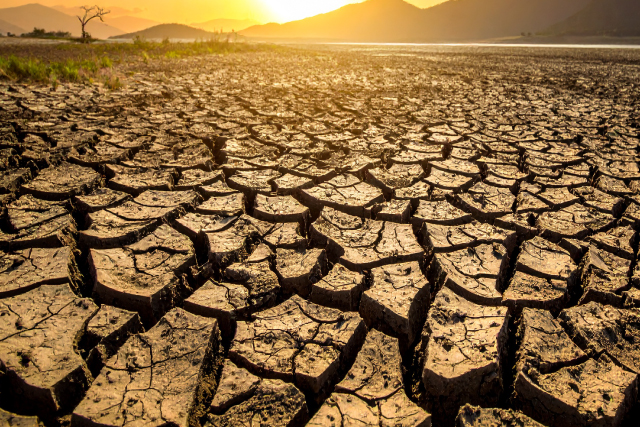
IPCC Sixth Assessment Report (March 2023)
- There is no doubt that global warming is caused by human activities.
- The temperature has already risen by 1.1 degrees Celsius compared to pre-industrial times.
- There is a risk that we will reach a 1.5 degree temperature rise in the next 10-20 years.
- Greenhouse gas emission reduction targets of countries around the world are insufficient.
- A 60% emission reduction is necessary in 2035 compared to 2019.
- The choices and actions we make today will have an impact for thousands of years to come.
The latest Intergovernmental Panel on Climate Change (IPCC) Sixth Assessment Report, published in March 2023, once again demonstrated that there is no doubt that global warming is caused by human activities. The temperature has already risen by more than 1 degree C compared to pre-industrial times, and it is predicted that it may reach 1.5 degrees in the next 10 to 20 years, while global warming countermeasures in countries around the world are extremely insufficient.
- Take Action
Project 2Paris Agreement
Learn about the efforts to achieve the 1.5°C goal of the Paris Agreement and understand the importance of international cooperation to limit climate change.
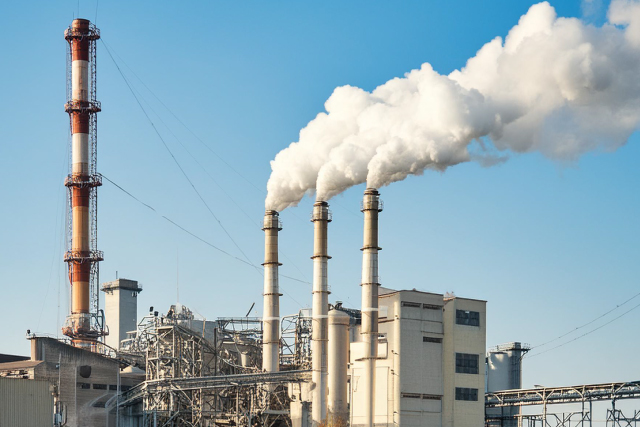
Challenges to achieve the 1.5℃ goal of the Paris Agreement
If we choose and act now, we can avoid impacts that will last for thousands of years. Therefore, we need to work on decarbonization as soon as possible. The Paris Agreement, which came into force in 2016, is accelerating this decarbonization effort. The agreement sets a goal of limiting the rise in the global average temperature to 1.5℃ compared to pre-industrial revolution levels, and various studies and research and development are being carried out to achieve this goal.
GHG and SLCF
| Category | Name |
|---|---|
| GHG: Greenhouse Gas | CO2, CH4, N2O, Hydrofluorocarbons (HFCs) |
| SLCF: Short-Lived Climate Forcer | CH4, HFCs, O3, BC (Black Carbon) and other aerosols |
Project 3Global Stocktake
An important process to confirm the progress of each country's emission reduction target under the United Nations Framework Convention on Climate Change and to increase the effectiveness of global climate action.

Towards a global decarbonized society
Towards a global decarbonized society, the Paris Agreement has made it a global commitment to reduce greenhouse gas emissions as soon as possible. It is, therefore, becoming increasingly important to accurately grasp the amount of greenhouse gas emissions released into the atmosphere from various emission sources. In April 2021, Japan also set the goals of carbon neutrality by 2050 and a 46% reduction in greenhouse gas emissions by 2030 (compared to the 2013 levels).
Global Stocktake
The Global Stocktake is a global progress assessment process under the Paris Agreement. It is an important tool for all countries to take collective action to review progress towards achieving the goals and to take necessary measures.
NDC (Nationally Determined Contribution)
NDCs are emission reduction targets set by each country, which show concrete actions to achieve the goals of the Paris Agreement and emphasize the responsibility of each country.
Project 4GOSAT-series Satellite Observation
"Top-down estimation" using satellite data allows for a rapid understanding of greenhouse gas emissions and plays an important role in verifying reduction measures.
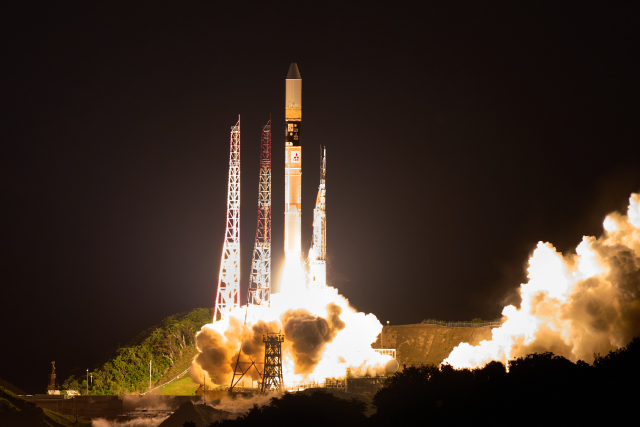
GOSAT-series Satellite Observation
There are high expectations worldwide for the derivation of data from satellite observations from space. In particular, it will contribute significantly to the accurate understanding of current emissions, which is necessary for each country to set appropriate and ambitious emission reduction targets (Nationally Determined Contributions, NDCs).
Until now, developed countries have calculated and published greenhouse gas emissions and removals in accordance with the United Nations Framework Convention on Climate Change and related decisions of the Conference of the Parties. These calculated values are called "bottom-up" estimates, but there are issues with the emission inventory of these bottom-up estimates. One is the "accuracy of the values," which stems from uncertainties due to the type of greenhouse gas and the inventory technology of each country. The other is the "time lag," which means that it takes years to compile a "bottom-up" estimated inventory because official statistics are used.
For example, in Japan, the 2019 edition of the estimates was published in April 2021 (Ministry of the Environment and National Institute for Environmental Studies, 2021). A "top-down estimate" using atmospheric observation data, such as satellite data, can play a complementary role to such bottom-up estimates. In recent years, atmospheric observation data have been distributed in near-real-time, and there are high expectations for its speed.
Promptly constructing an up-to-date emission inventory is important not only as a "base year" for future scenarios, but also for "verifying" the validity of scenarios created in the past, and is extremely important in the global stocktake for quickly verifying the effects of reduction measures and utilizing them in future measures (Janssens-Maenhout et al., 2020).
- [ Reference ]
- Janssens-Maenhout et al., 2020. Toward an Operational Anthropogenic CO2 Emissions Monitoring and Verification Support Capacity, Bulletin of the American Meteorological Society, 101(8), E1439–E1451.
DOI: https://doi.org/10.1175/BAMS-D-19-0017.1
The GOSAT Series
The GOSAT Series consists of the earth-observing satellites GOSAT, GOSAT-2, and GOSAT-GW, which observe greenhouse gases such as carbon dioxide and methane to contribute to climate science and climate change-related policies. The GOSAT Series is a project that is jointly promoted by three entities: the Ministry of the Environment (MOE), the National Institute for Environmental Studies (NIES), and the Japan Aerospace Exploration Agency (JAXA).
- Greenhouse gases Observing SATellite : GOSAT (Ibuki)
- Greenhouse gases Observing SATellite-2 : GOSAT-2 (Ibuki-2)
- Global Observing Satellite for Greenhouse gases and Water cycle: GOSAT-GW (IBUKI GW)

- Take a look
-
- GOSAT Data Archive Service (GDAS)
- GOSAT-2 Product Archive
- GOSAT-GW TANSO-3 Product Archive (G3PA)